On Time and Water by Andri Snaer Magnason
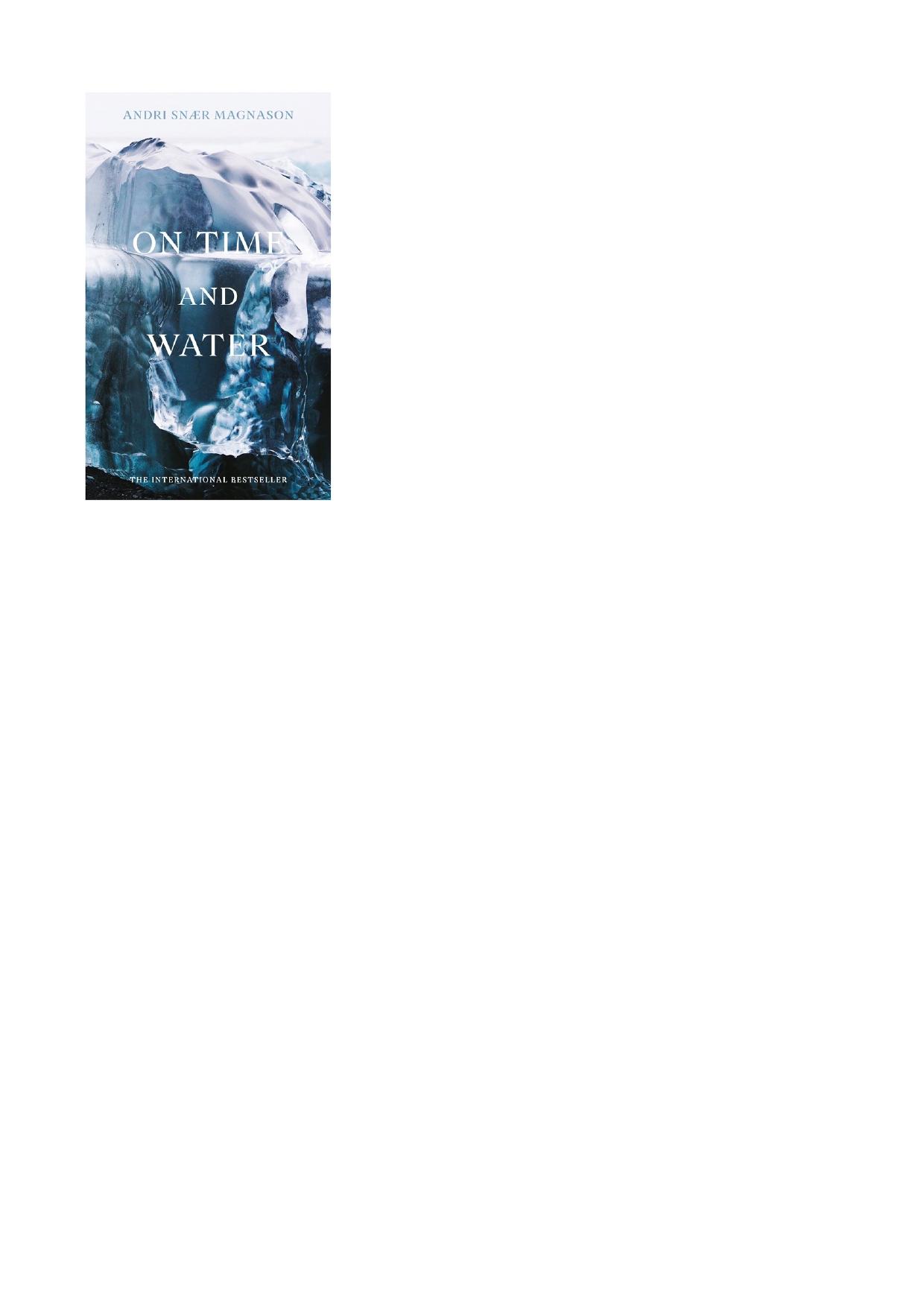
Author:Andri Snaer Magnason
Language: eng
Format: epub, pdf
Publisher: Profile
The mother of the universe, white as rime
The Himalayan region is home to 46,000 glaciers. These are to be found amidst the worldâs highest mountains, many protruding as high as eight thousand metres. They are scattered throughout the mountain range, hiding in valleys and cirques under precipitous mountain slopes. In total, the Himalayan glaciers are only about four times larger in area than the Icelandic glaciers. They cover a total area of about forty thousand square kilometres, but the volume is very similar to the volume of all Icelandic glaciers, about four thousand cubic kilometres.[42]
Icelandâs glaciers in many cases reach down to sea level, and one might expect such glaciers to be more sensitive to climate change than glaciers far up in the Himalayas. Recent research, however, shows that high-altitude glaciers, where the state of winter might seem eternal, have retreated to a similar extent as the Icelandic glaciers. The surface area of these glaciers tells only half the story, since some glaciers are diminishing in thickness by a metre per year. The receding of glacial outlet tongues in the Himalayas has led to unstable glacier lagoons forming behind weak glacial moraines. These moraines crack, causing tremendous floods with related casualties in towns and villages that lie close to the rivers.
As the Icelandic glaciers retreat, the flow of glacial rivers increases. This is good news in the short term for energy companies that harness hydropower, until the flow decreases again and becomes tantamount to precipitation. The glaciers affect weather systems, drawing in precipitation so that it mostly falls on the south side of the larger glaciers. Precipitation will likely fall in more northerly spots if glaciers disappear. In the Himalayas, the flow of glacial water is expected to increase over the next few decades. The problem is that, while most of the Icelandic rivers flow fast and free to the sea, the rivers in the Himalayas provide the livelihoods of billions of humans and the foundation for a diverse biosphere from mountain settlements to estuaries. As water increases due to melting, a false prosperity can emerge, as if you were to take all your money out of the bank or burn through your supply of winter hay in the first month. Thereâs something vicious about the problem of a temporary increase in water flow improving the quality of life, the soil vegetation, the groundwater status, and even electricity production â all before the rug is pulled out from under the feet of millions of people. When the glaciers have gone, another system, a more finicky one, will come into being, marked by excess water during the monsoon season and water shortages during the drought period â these droughts might well be longer and more extreme due to the rising temperatures. The services provided by glaciers cost nothing. People are beginning to understand why the glaciers in the Himalayan region have been considered sacred.
Lonnie Thompson is a professor of glaciology in Ohio. He probably has the most knowledge of anyone on Earth of the worldâs high-altitude glaciers, their history and future evolution.
Download
This site does not store any files on its server. We only index and link to content provided by other sites. Please contact the content providers to delete copyright contents if any and email us, we'll remove relevant links or contents immediately.
Man-made Catastrophes and Risk Information Concealment by Dmitry Chernov & Didier Sornette(6013)
The Revenge of Geography: What the Map Tells Us About Coming Conflicts and the Battle Against Fate by Kaplan Robert D(4076)
Zero Waste Home by Bea Johnson(3835)
COSMOS by Carl Sagan(3622)
Good by S. Walden(3549)
In a Sunburned Country by Bill Bryson(3538)
The Fate of Rome: Climate, Disease, and the End of an Empire (The Princeton History of the Ancient World) by Kyle Harper(3064)
A Wilder Time by William E. Glassley(2860)
Camino Island by John Grisham(2797)
Organic Mushroom Farming and Mycoremediation by Tradd Cotter(2690)
The Ogre by Doug Scott(2680)
Human Dynamics Research in Smart and Connected Communities by Shih-Lung Shaw & Daniel Sui(2500)
Energy Myths and Realities by Vaclav Smil(2490)
The Traveler's Gift by Andy Andrews(2460)
9781803241661-PYTHON FOR ARCGIS PRO by Unknown(2365)
Inside the Middle East by Avi Melamed(2353)
Birds of New Guinea by Pratt Thane K.; Beehler Bruce M.; Anderton John C(2254)
A History of Warfare by John Keegan(2240)
And the Band Played On by Randy Shilts(2202)
